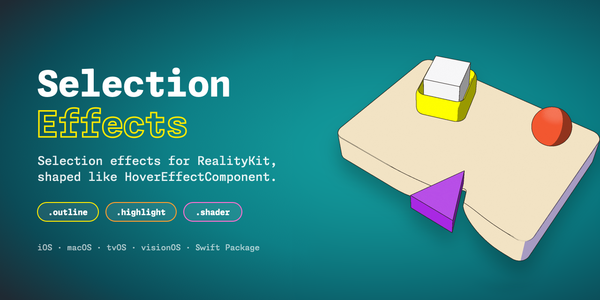
RealityKit
Selection Effects for RealityKit
A HoverEffectComponent-shaped API for selections in RealityKit.

RealityKit
A HoverEffectComponent-shaped API for selections in RealityKit.
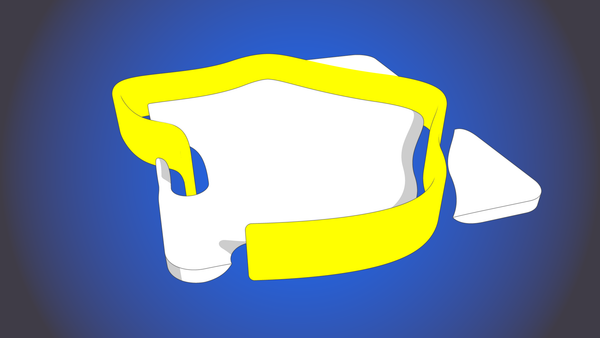
RealityKit
ℹ️Update (October 2026): This is now a Swift package Beyond the RealityView effect described here, it adds: * ARView support back to iOS 15 (UIKit/AppKit) via install(on:), prompted by Richard Hasson's email * outlines that follow moving entities (transforms refresh every frame, not just at selection) * multi-

Reality Composer Pro
The previous inspector series parts explored attributes that map cleanly to USD: transforms, material bindings, and variant sets. Components are different. One might expect that RCP's component inspector would just show RealityKit components attached to entities—the same components you'd add in code at runtime. But
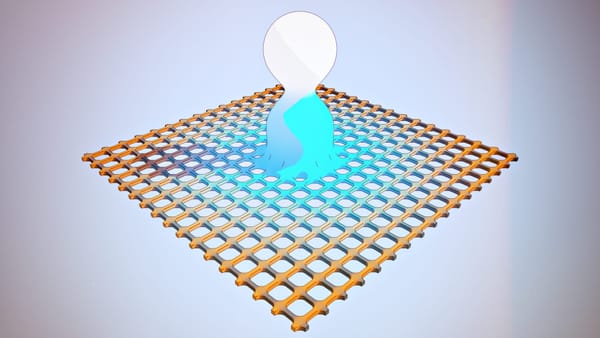
Reality Composer Pro
Viewport is deep (modes, debug views, presets/history). We are going to implement just a working viewer + camera for this pass; chasing full parity will balloon scope. The main viewport is built with RealityKit, and we'll add a layer for gestures, a grid, and a simple Arcball implementation
Reality Composer Pro
An exploration of the .realitycomposerpro document type. This post breaks down its structure as an SPM-backed package, the nested bundle system for assets, and how this layout could enable Xcode and `realitytool` processing.
Reality Composer Pro
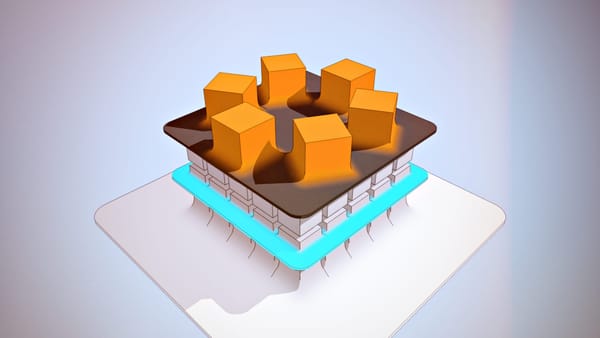
Reality Composer Pro prioritizes the transition of elements over direct emphasis on creation and debugging tasks. It's a portal where you transport raw, wild formats to more manageable, controlled, static-defined files that can be represented on RealityKit.
RealityKit
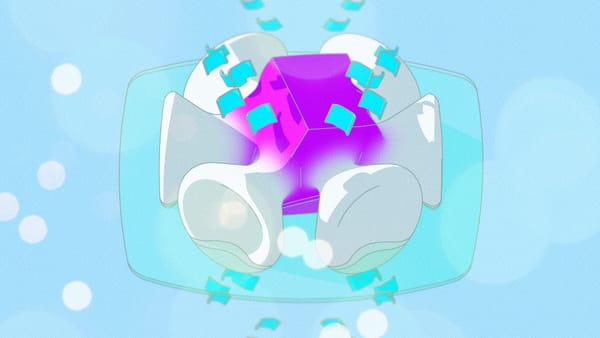
Xcode runs a verified two-pass process to compile .reality files: first generating USD schemas from your Swift components, then compiling them into optimized bundles.
WWDC
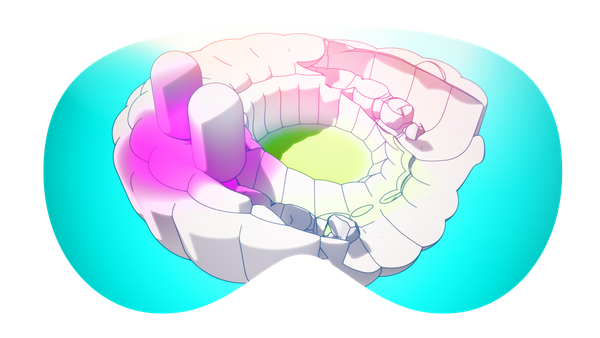
TL;DR * Spatial computing is in a transitional phase: the technology is robust, but the market and use cases are still catching up. * Apple’s approach is methodical, not flashy: rather than chasing hype, Apple is building the infrastructure—standards, APIs, specifications, developer tools—that will power the next wave

ARKit
TL;DR, If you want virtual environment light gradually replacing your real-world shaded objects, use Virtual Environment Probe. Achieving visual realism for virtual elements involves many parts, but lighting stands out as particularly challenging, especially in real-time rendering for platforms like visionOS and RealityKit. Material surface behavior in

TabletopKit
TL;DR, If you are interested in building a spatial game (or just about any immersive experience), you'll probably want to implement an architecture like TabletopKit. Create multiplayer spatial games on a virtual table surface and use FaceTime to invite players. TabletopKit first impressions We are creating a
RealityKit
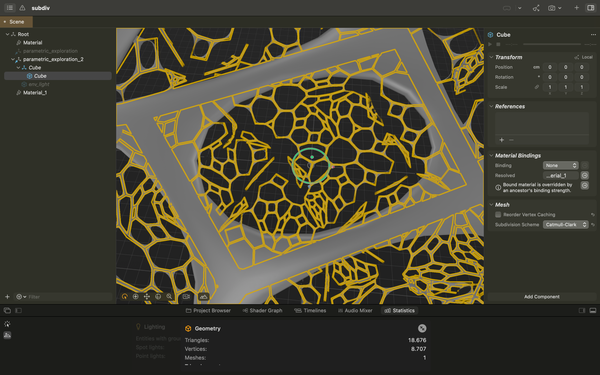
TL;DR: SubD can currently only be activated on Reality Composer Pro and for geometry using physically based (not custom) materials. While working with 3D, especially for real-time rendering engines like RealityKit (the current engine powering visionOS), balancing geometry, material types, sizes, and render passes is critical for creating

RCP
Reality Composer from macOS (not Pro) was quietly sunset not too long ago. Aside from being a graphical editor that allowed for basic scene setup, it also had other great utilities, such as cross-platform preview and some popular features that allowed for creating interaction with triggers and events. Reality