
Resourwwdces

Resourwwdces

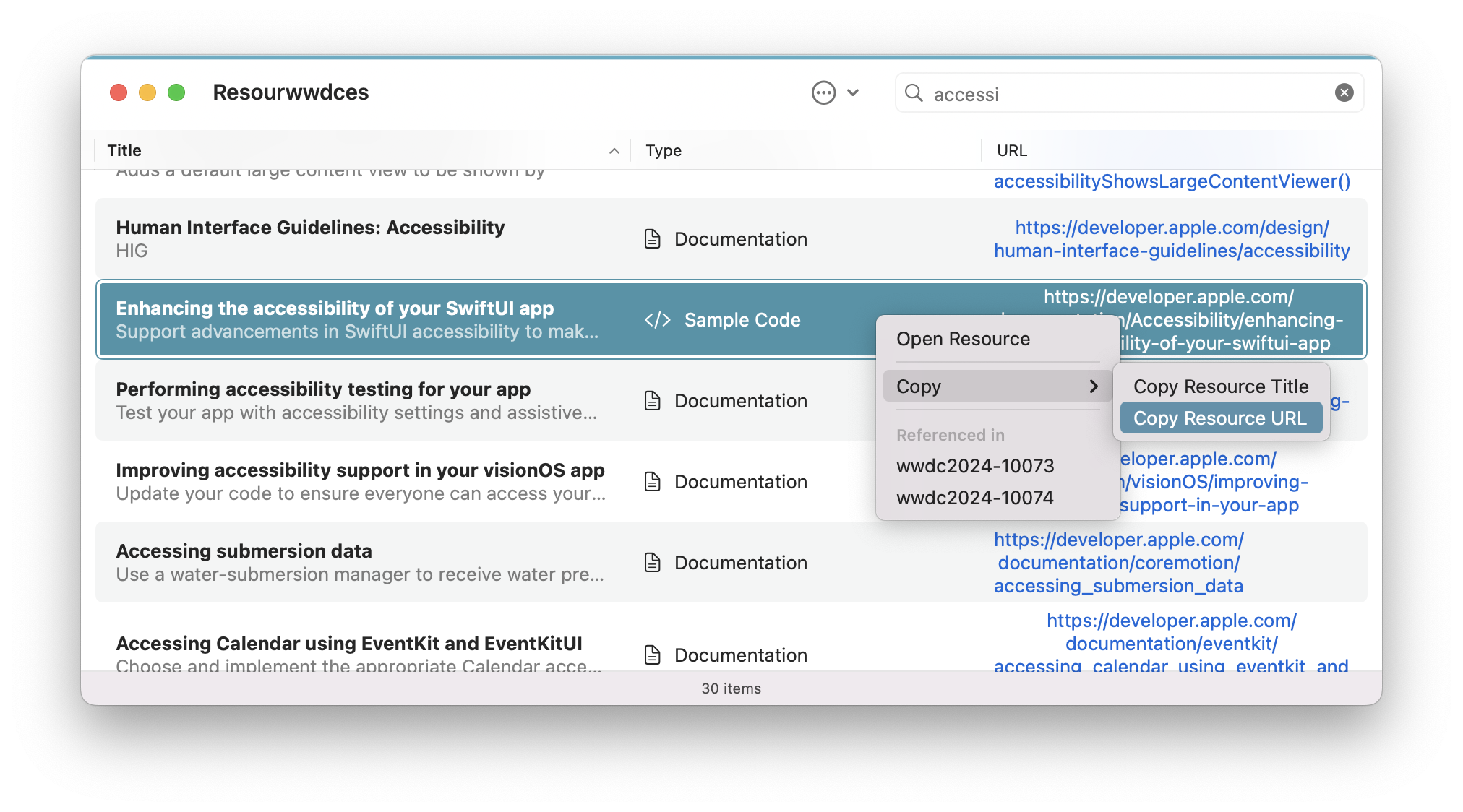
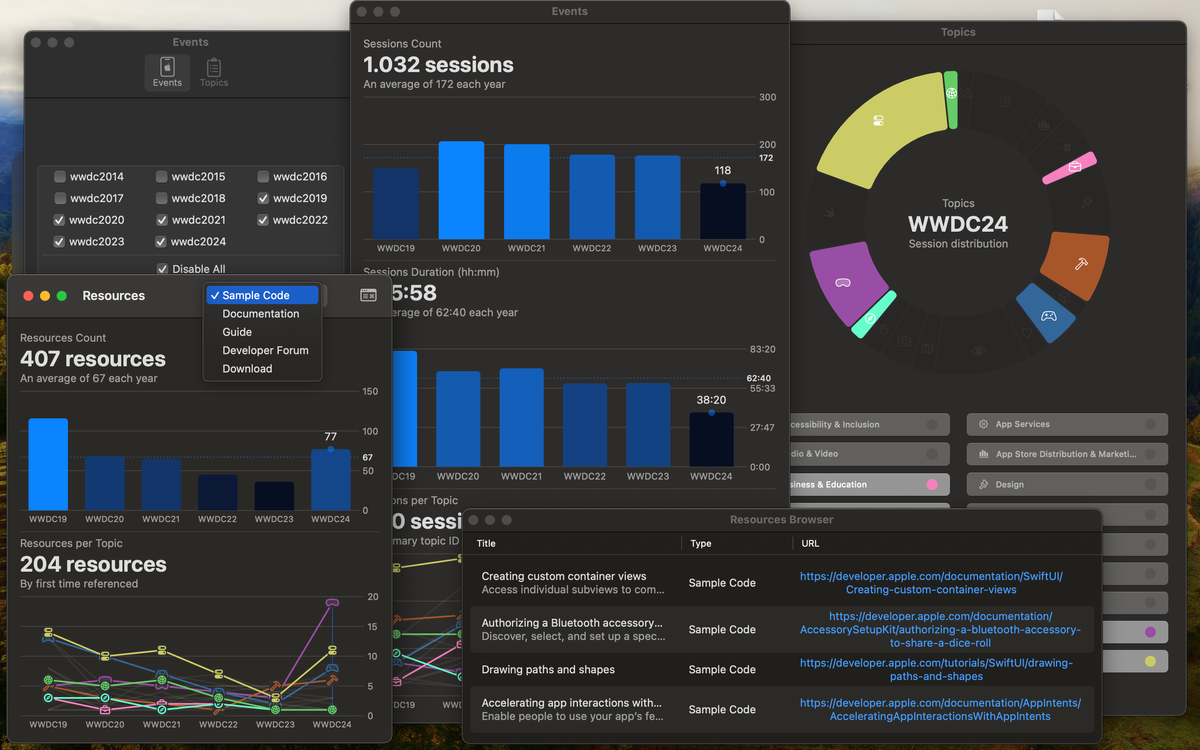
1679 links, 5 categories, 10 years. That is how many resources have been shared on WWDC editions since 2014. The categories are Sample Code, Documentation Guide, Developer Forum, and Download, and all of the goodies fit within those boxes. I already partially mentioned this for WWDC24 on the 108 Related Documents & Abundance of code samples articles, but after doing Transwwdcripts, I had the itch of also having an utility that allowed me search on the resources list and potentially have some added niceties (like displaying the content that mentioned a specific resource).
And that's it—a small macOS app named Resourwwdces that you can download right now, and let me know if you have any feedback.


Transwwdcripts
In the spirit of ASCIIwwdc, understanding that transcripts have significant benefits for accessibility and research, creates a situation in which making text versions of talks available becomes an essential feature. That is basically true these days for WWDC (thanks to the behind-the-scenes contributors who helped make these things happen), but
108 Related Documents (WWDC24)
Another significant difference from the most recent WWDC is the expanded documentation and references. DocC continues to evolve, and adoption is a strong indicator of it. Here is a list, in the same spirit as the last one, showcasing the articles mentioned by sessions, sorted by topic. 🔍Look closely at
Abundance of code samples (WWDC24)
Apple has made strides toward producing and updating sample code this year (as mentioned earlier). But discoverability could be boosted IMO. Currently, we do have a canonical categorization by technology, but it can be helpful to be able to browse through the same materials grouped by the session that they
Dunfey Hotel
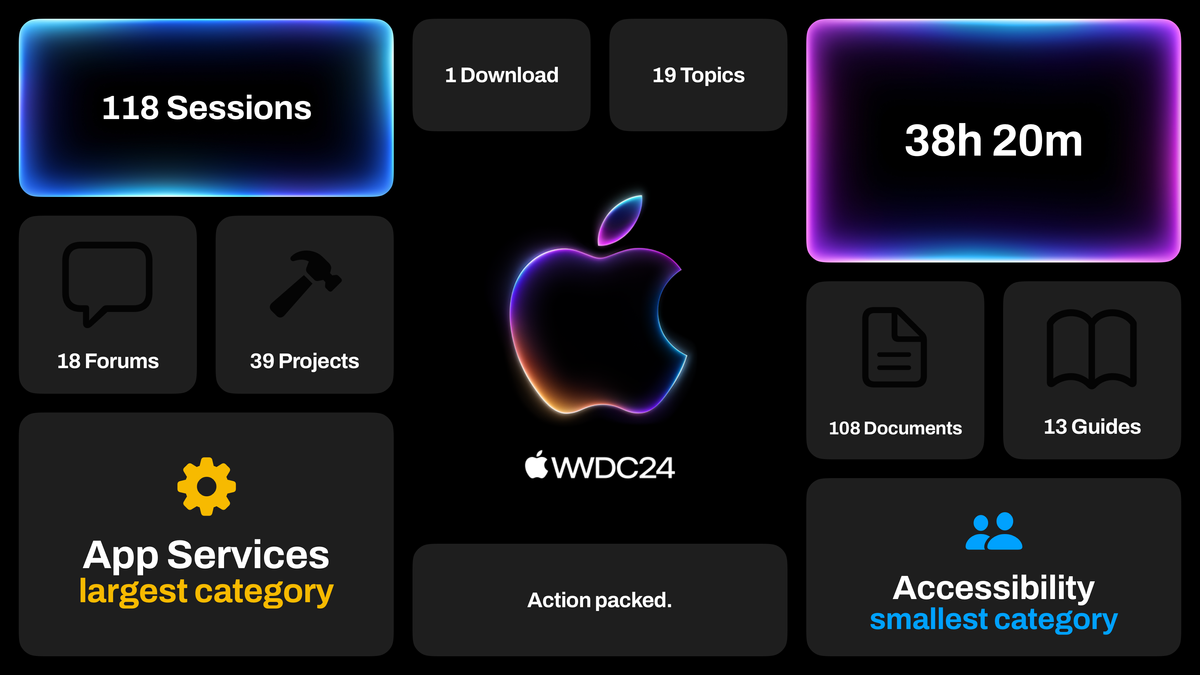
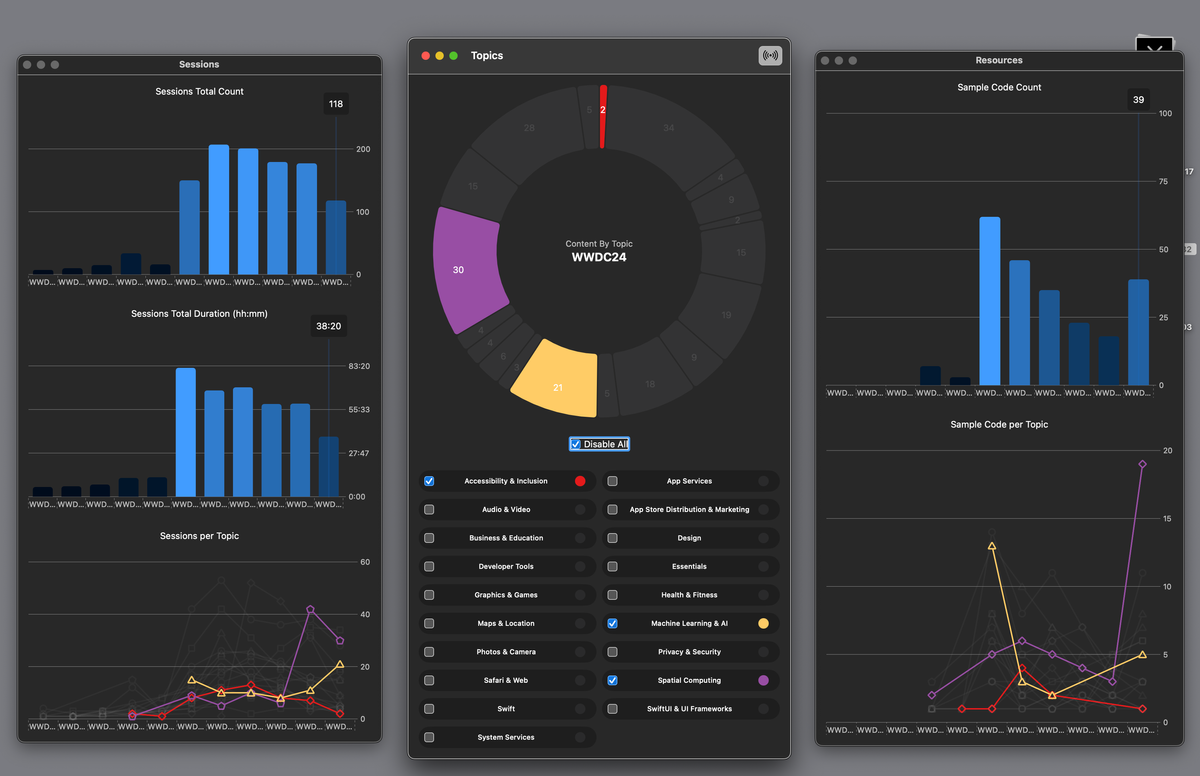
I might have gone a little overboard and accidentally created a WWDC metrics browser
Pageview analytics comparison

We are comparing self-hosted OpenPanel with the analytics already used on this site. This comparison records page paths, referring website origins, pageview times, random event IDs, browser and device information, and approximate location. Our server processes IP and browser information to generate rotating, pseudonymous visitor IDs. OpenPanel does not use tracking cookies or save a visitor ID in your browser. URL queries, fragments and page titles are removed; click tracking and session replay are off.

Do Not Track and Global Privacy Control disable this OpenPanel comparison. If you change the choice below, only that preference is saved in your browser. Existing analytics remain active during the comparison. Contact and site information.