RealityKit
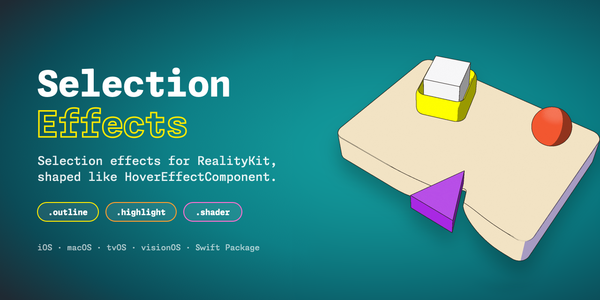
Selection Effects for RealityKit
A HoverEffectComponent-shaped API for selections in RealityKit.

RealityKit
A HoverEffectComponent-shaped API for selections in RealityKit.
RealityKit
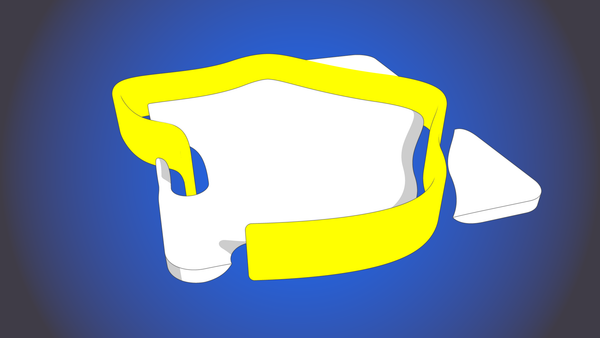
ℹ️Update (October 2026): This is now a Swift package Beyond the RealityView effect described here, it adds: * ARView support back to iOS 15 (UIKit/AppKit) via install(on:), prompted by Richard Hasson's email * outlines that follow moving entities (transforms refresh every frame, not just at selection) * multi-
WWDC
TL;DR * Spatial computing is in a transitional phase: the technology is robust, but the market and use cases are still catching up. * Apple’s approach is methodical, not flashy: rather than chasing hype, Apple is building the infrastructure—standards, APIs, specifications, developer tools—that will power the next wave

Accessibility
Control Center is about to receive an update on the upcoming release of iOS 18. Controls are a new type of widget that extend app functionality into system spaces like Control Center, the Lock Screen, and the Action button.There are two types of controls: buttons and toggles. Controls use
SwiftUI
I love when Scarlett Johanson says stuff like: Handling color interpolation, especially with hues, can be tricky due to the circular nature of the color wheel, but it's satisfying to get it right. 🆕Apple's new Color.mix(with:by:in:) API can provide the same or

SwiftUI
We have this feature in a visionOS app that allows users to select videos from their library using the PhotosPicker from PhotoKit. Overall, its implementation is simple and effective, especially given everything that is going on behind the scenes. Once a video is selected, we wanted to avoid restricting the

SwiftUI
One common issue encountered when developing for visionOS is that all measurements are displayed in imperial units by default. This is because there are still no settings for Language & Region. To allow users to select the measurement unit type without having to set the locale, formatters must be used

SwiftUI
It all began with the question, "How can SwiftUI make VoiceOver speak multiple languages?" Then I went down a rabbit hole to learn more about the relationship between attributed strings and voice synthesis. This worked with some caveats, but it provided an answer that solved the question. Or

visionOS
Observing the ScenePhase in the environment has demonstrated to be a far more reliable technique for determining if an ImmersiveSpace is active or not. This is particularly helpful for making accessibility announcements, as it allows the user to adjust to the context switch. import SwiftUI @main struct ImmersiveScenePhaseApp: App { @Environment(